This is a quiet week for weather in New York City. The National Weather Service forecast for Manhattan shows sunny days with highs around 60 through Saturday, nights in the mid to upper 40s, and a chance of rain Sunday. Weeks like this are the easiest time of the season to get on a roof: no snow, no ice on the walkways, and enough daylight to finish checks before the colder weather of late November and December arrives.
What warm days and cool nights do to equipment
A swing of 10 to 15 degrees between afternoon and night is common this time of year. In a building with sunny exposures and interior zones, some spaces may call for cooling in the afternoon while others call for heat in the evening. That is normal, but it is also when control problems show up:
- Changeover settings. On VRF/VRV heat pump systems and other equipment with automatic changeover, check that zones are not flipping between heat and cool more than expected. Short, frequent mode changes waste energy and add wear.
- Light loads hide problems. Equipment that barely runs on a 60-degree day can look fine and then fault on the first cold night. Running each zone in heat on a cool evening is a better test than waiting for a complaint.
- Schedules and setbacks. Confirm building automation and thermostat schedules were moved over to the heating season, including holiday schedules.
Rooftop VRF/VRV condensing units
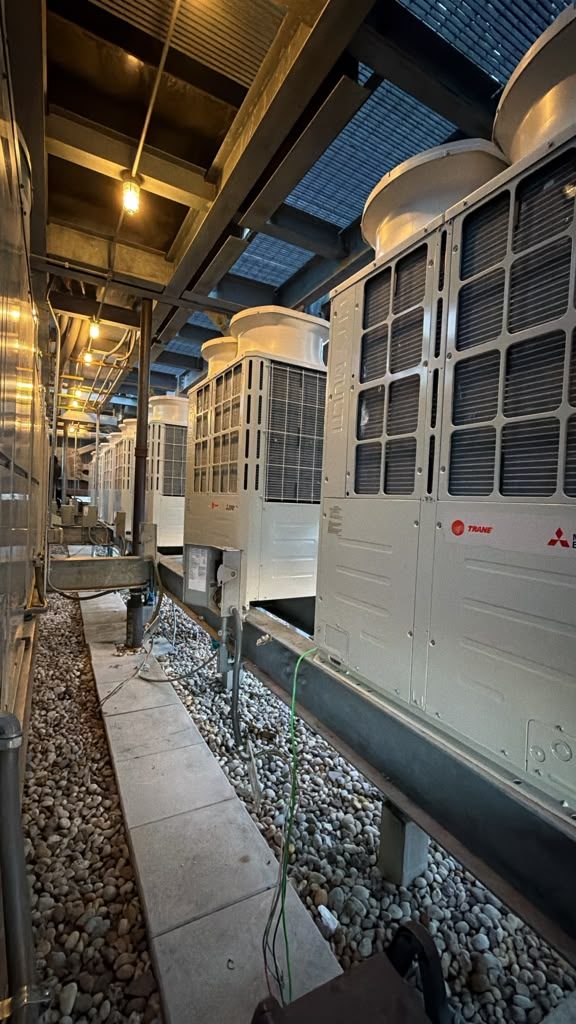
Outdoor units do the heavy lifting in heating mode, so a dry, mild day is the right time to look at them:
- Clear the coils and the space around them. Remove leaves, debris and stored materials, and keep the clearances the manufacturer calls for so airflow is not restricted once defrost cycles start.
- Look at stands, dunnage and anchoring. Units should sit level and secure on their supports, and drainage under them should be clear so defrost water can run off instead of refreezing.
- Check refrigerant line insulation and covers. Summer sun breaks down exposed insulation. Cracked or missing insulation on rooftop line sets is worth fixing before winter.
- Note error codes. Have a qualified technician review any stored fault codes on the outdoor units and controllers before the heating season is in full swing.
Rooftop units
Rooftop units with gas heat or electric heat should have the heating section, ignition, safeties and flue checked by a qualified technician before steady cold arrives. From the building side, swap out filters that loaded up during cooling season and make sure outdoor air dampers close properly when they should.
Energy recovery ventilators and outdoor air units
ERVs and dedicated outdoor air units bring in fresh air all winter. Before the cold, check filters on both the outdoor air and exhaust sides, confirm that any frost protection or preheat that was designed into the system is working, and make sure the outdoor air intake is clear of debris. Intakes and exhausts that face prevailing winter winds are worth a closer look.
Roof access and safety
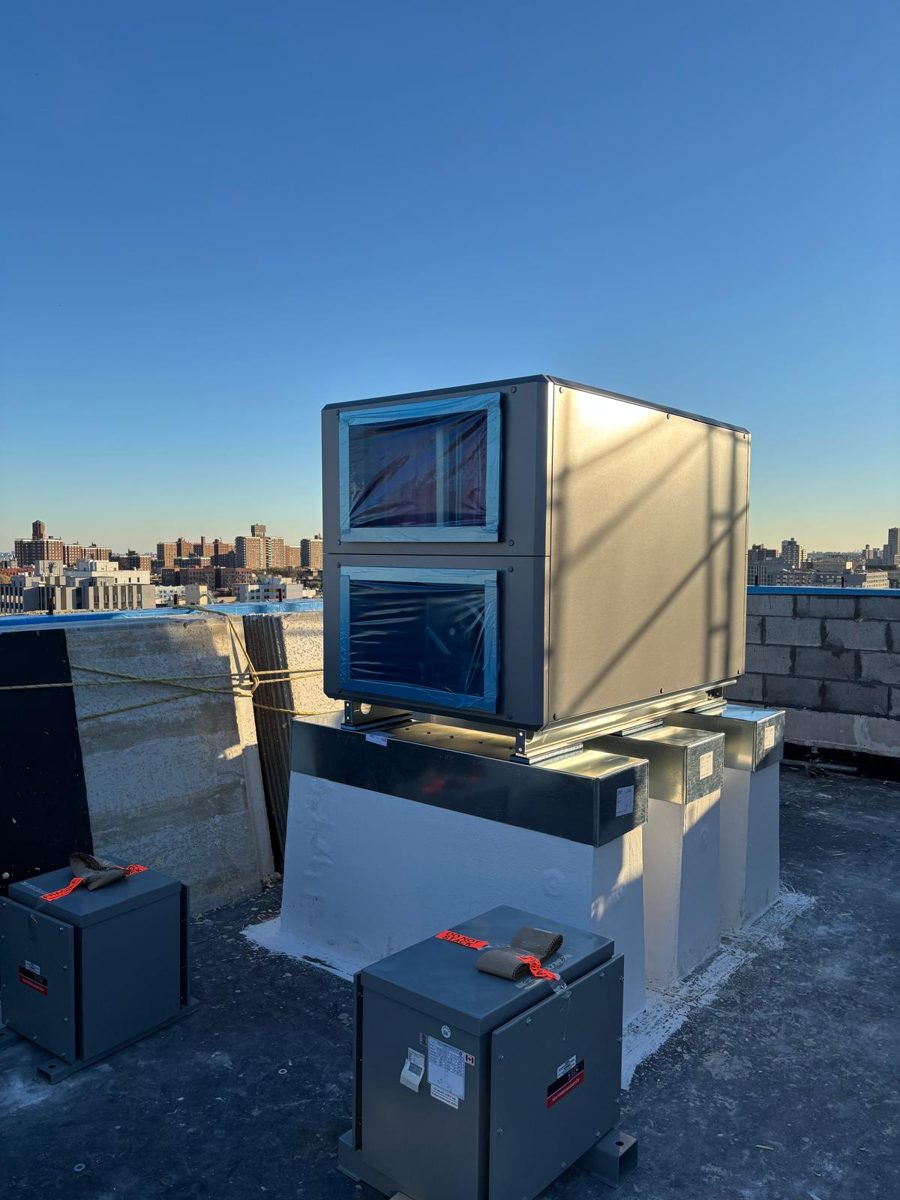
Snow and ice slow down every service call on a roof. Keep roof hatches, walkways and ladders clear, make sure lighting near the equipment works, and plan any equipment moves, sets or replacements while the weather allows. Our crews were setting and servicing rooftop equipment in Manhattan and the Bronx this week for exactly that reason.
Request a quote
If you are planning rooftop VRF/VRV, rooftop unit or ERV work, or want ductwork and piping priced for spring, send your drawings or project details through Request a Quote or call (718) 616-8611. Superior HVAC works across Manhattan, Brooklyn, Queens, the Bronx, Staten Island and Long Island. For more on winter prep, see Getting Commercial HVAC Ready for a New York Winter.
Get in touch
Request a quote
Send drawings or tell us about your project. Bid invitations welcome.
(718) 616-8611Email[email protected]
Office226-10 Jamaica Ave, 2nd Floor, Floral Park, NY 11001